
The movement to create a fully accessible and inclusive Canada continues to grow, and some of its roots extend back to the 2010 Olympic and Paralympic Winter Games, according to the Rick Hansen Foundation (RHF).
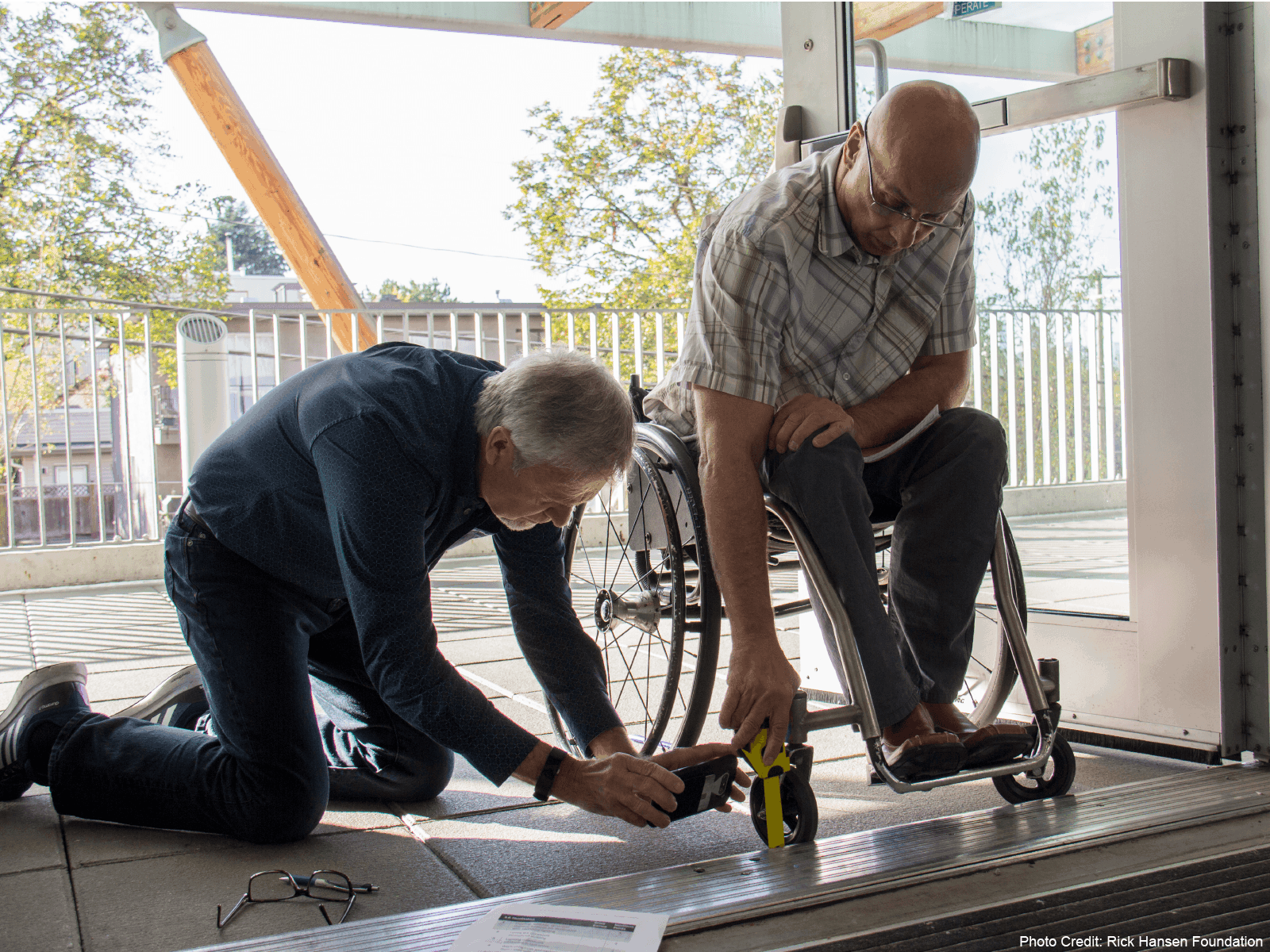
As part of its post-Games transition, 2010 Legacies Now transferred its accessible tourism program and resources to the Foundation to support its efforts to promote accessibility and inclusion. The Foundation successfully evolved the work from the Games into the highly successful Rick Hansen Foundation Accessibility CertificationTM (RHFAC) rating system that uses trained professionals to evaluate the level of meaningful access of commercial, institutional, and multi-unit residential buildings and sites.
“We help property owners and managers measure the accessibility of their sites and promote increased access through the adoption of Universal Design principles,” said Amanda Basi, Director of Accessibility Certification at the Rick Hansen Foundation.
“The funding and learnings from 2010 Legacies Now supported us significantly on our journey to develop the certification program as it stands today,” said Basi. “We have rated more than 1,200 buildings across Canada with a certification level of 752 and growing.”
Amanda Basi Director of Accessibility Certification, Rick Hansen FoundationThe funding and learnings from 2010 Legacies Now supported us significantly on our journey to develop the certification program as it stands today.”
"Accessibility is more important than ever. Almost 50 per cent of Canadians have a relationship with someone who has a physical disability or challenge, or have had one themselves," said Basi. "Within the next 20 years, the number of Canadians with a physical disability is expected to grow to more than nine million - or one in five of us."
The Foundation reports that accessibility is both a source of anxiety and a significant consideration for Canadians today. More than 50 per cent want Canada-wide standards for universal access and thirty per cent consider accessibility when deciding which businesses to visit - that is nine million adults.
"Canadians care about access," said Basi. "The work from the Games helped us recognize some important gaps where the Foundation could have impact in terms of encouraging inclusive spaces for all people."
2010 Legacies Now was an innovative non-profit organization that leveraged the 2010 Olympic and Paralympic Winter Games to create tangible community legacies throughout British Columbia that would continue to live well beyond 2010. It is considered a best practice by the International Olympic Committee.
2010 Legacies Now was made possible thanks to invaluable support from the Province of BC, other government partners, corporations and foundations. Support and collaboration from communities, not-for-profits, agencies, VANOC, Four Host First Nations Society and others were also key in driving success.
LIFT Impact Partners evolved from 2010 Legacies Now into a national non-profit that builds the capacity of social purpose organizations Canada-wide to become more sustainable and effective at delivering greater social impact in the areas of health, education and skills development leading to employment.